Generative Engine Optimization vs SEO
SEO helps buyers find your page. GEO helps AI systems understand, trust, and cite it. Here is when you need one, the other, or both.
InflectPublished
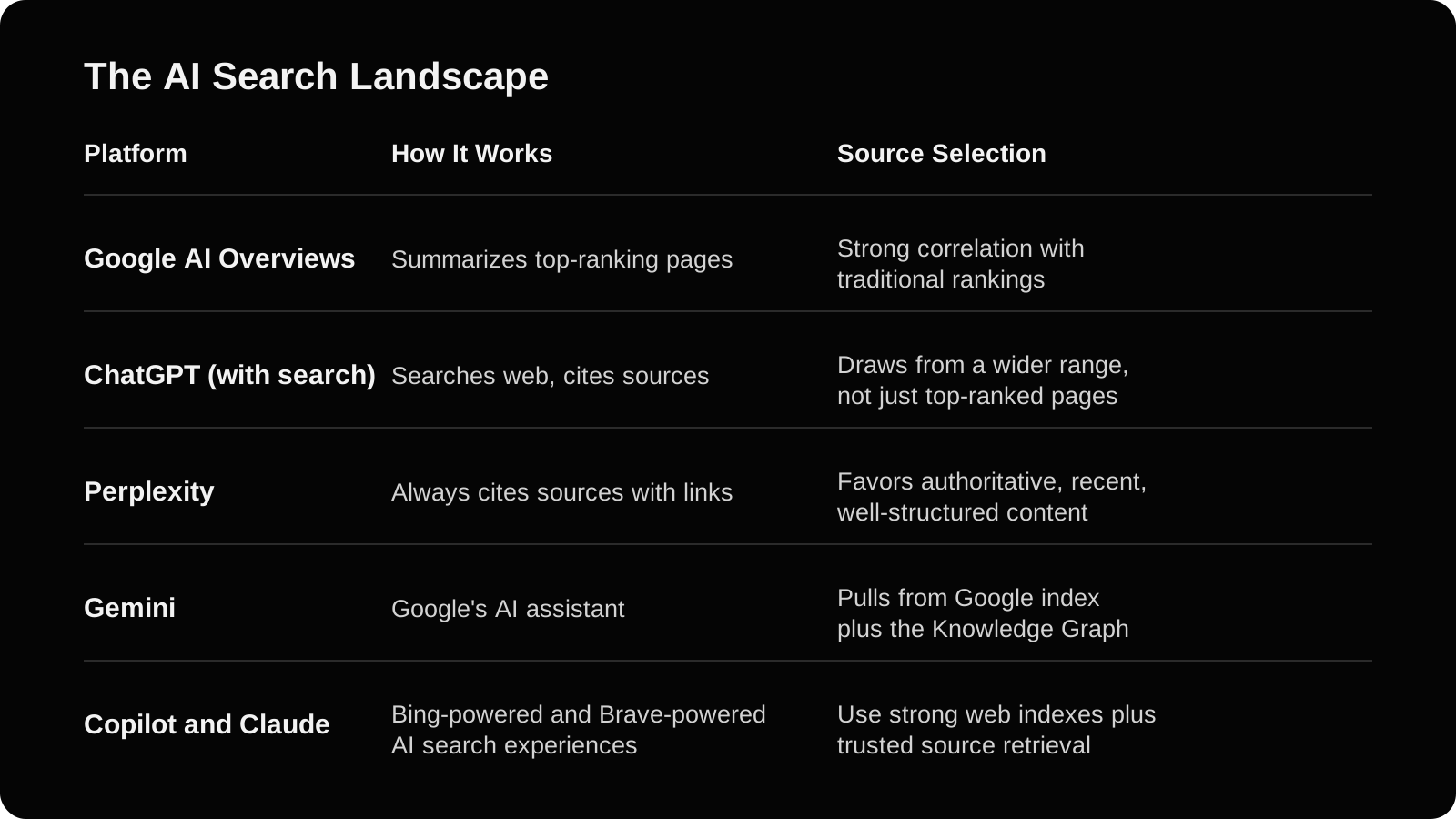
Quick Summary: SEO helps search engines find and rank a page. Generative engine optimization, or GEO, makes that page easier for AI systems to understand, trust, and cite. Most teams still need SEO first. GEO matters most on pages that influence buying decisions, such as comparisons, category guides, and product explainers.
The difference in one example
Imagine a B2B software company with a comparison page that ranks well in Google.
The page opens with several paragraphs about the market. Its strongest claim appears halfway down. The supporting evidence sits in another section, and the actual comparison is buried near the bottom.
A person who reads the entire page can work out the answer. An AI system looking for a clear, supportable passage has a harder job. The page is discoverable, but it is not an especially useful source.
Improving that page for AI answers does not mean stuffing it with new terminology. It means moving the answer closer to the top, putting evidence beside the claims it supports, and making each important section understandable on its own.
That is the practical difference between SEO and GEO.
| SEO | GEO | |
|---|---|---|
| Main job | Help the right page get found | Help AI systems use and cite the page |
| Reader outcome | A search result worth clicking | An answer the brand can credibly support |
| Common problem | The page is difficult to discover | The page is visible but difficult to quote or trust |
| Useful signals | Rankings, impressions, clicks, sessions | Citations, AI-origin visits, and changes after a page update |
SEO is still the foundation
AI search still has to find the right page before it can use anything from it.
Modern search systems often combine keyword matching with semantic retrieval. Microsoft's hybrid-search overview and ranking guide show why familiar SEO work still matters: the page must be accessible, clearly about the subject, and written in language that matches how people ask about it.
SEO still handles the basics:
- Make sure search engines can access the page.
- Give each page a clear purpose.
- Use internal links to show how related pages fit together.
- Keep titles, headings, and canonical URLs consistent.
- Use the words buyers use, not only the language the company uses internally.
If those basics are weak, GEO will not rescue the page. The first job is still to make the right content discoverable.
What GEO changes
GEO starts with a different question: if an AI system finds this page, is there anything here it can confidently use?
The Princeton GEO paper studies visibility inside generated answers rather than position on a traditional results page. That distinction changes how a team edits content.
Three changes matter most.
1. Answer the question before expanding on it
Readers should not have to wait through a long introduction to understand the point. Put the clearest answer near the top, then add nuance.
This is better for people as well as AI systems. A busy marketing leader can decide quickly whether the page is useful. An answer engine can identify the main claim without piecing it together from several sections.
2. Keep proof close to the claim
If a page says a product saves time, reduces risk, or performs better, show the evidence nearby. That might be a customer result, a linked source, a product screenshot, or a clearly described method.
A strong claim with distant or missing proof asks both the reader and the AI system to make a leap. Good GEO reduces that leap.
3. Make important sections stand on their own
AI systems often work with passages rather than reading every page from top to bottom. Claude's search-results documentation describes how generated claims can be tied to source material.
For writers, the lesson is simple: an important paragraph should still make sense if someone lands on it directly. Avoid vague openings such as "this approach" or "as mentioned above" when the subject can be named plainly.
What changes in the content brief
An SEO brief usually covers the search intent, the main topic, supporting questions, and internal links. Keep all of that.
Then add three instructions:
- State the main answer near the beginning.
- Place evidence beside the claims it supports.
- Give every major section a clear point that can be understood without reading the whole article.
Notice what is not on that list: writing robotic copy, repeating the keyword, or adding a table to every section.
Content designed for AI answers should still sound like it was written for a person. In practice, the same qualities help both audiences: a clear answer, useful detail, honest proof, and less filler.
How to measure the difference
SEO reporting tells you whether a page is being found. Rankings, impressions, clicks, and sessions all matter.
They do not tell you whether an AI system used the page in an answer.
For pages receiving GEO work, add a second set of questions:
- Did the page begin appearing in relevant AI answers?
- Did those answers cite the page or the brand?
- Did visits from AI products change after the update?
- Which page change is the most plausible explanation?
That last question needs care. A new citation does not prove that one edit caused it, and an AI referral does not prove revenue. Treat citations and traffic as evidence, then connect them to leads and pipeline only when the data supports it.
A simple change log helps. Record what changed, when it went live, and what happened afterward. Over time, that gives the team a more honest view of which edits are worth repeating.
When to use SEO, GEO, or both
You do not need to apply GEO to every page.
| Page situation | Start with |
|---|---|
| The page is not ranking or being discovered | SEO |
| The page ranks, but AI answers rarely use it | GEO |
| The page is cited, but the business impact is unclear | Measurement |
| The page is new and commercially important | SEO and GEO together |
GEO is most useful on pages a buyer might expect an AI assistant to reference:
- category explainers
- product comparisons
- recommendation pages
- implementation guides
- pages answering high-intent buyer questions
A routine company update probably does not need the same treatment. Focus the work where being quoted or recommended could influence a real buying decision.
A practical workflow
For a commercially important page, the sequence can stay simple:
- Choose one buyer question the page should answer.
- Make sure the page can be found and clearly matches that question.
- Put the direct answer near the top.
- Add proof where the reader is most likely to question a claim.
- Publish the change and watch rankings, citations, AI-origin visits, and qualified outcomes.
This is not a choice between SEO and GEO. SEO gets the page into consideration. GEO improves the chance that its answer and evidence are useful once it is found.
If you want to see where your site is currently difficult for AI systems to access or trust, start with the free AI visibility audit.
Frequently Asked Questions
Is GEO replacing SEO?
No. SEO remains the foundation for making a page accessible and discoverable. GEO adds another layer for pages that should also be understood, trusted, and cited in AI answers.
Can a page succeed in SEO and fail in GEO?
Yes. A page can rank well and still be a weak source if its main answer is buried, its claims lack nearby evidence, or its important sections only make sense when read in sequence.
Does GEO mean writing for machines?
No. The best changes usually make the page better for people too: answer sooner, use plain language, support important claims, and remove filler.
How should a team measure GEO work?
Keep the SEO metrics, then add relevant citations, AI-origin visits, and a record of what changed on the page. Treat those as supporting evidence rather than guaranteed proof of revenue.
Should every page get GEO treatment?
No. Start with pages that influence buying decisions or answer questions where being quoted could matter commercially.