How to Measure LLM Visibility
A practical guide to measuring LLM visibility across crawl activity, citations, AI-origin traffic, and attribution.
InflectPublished
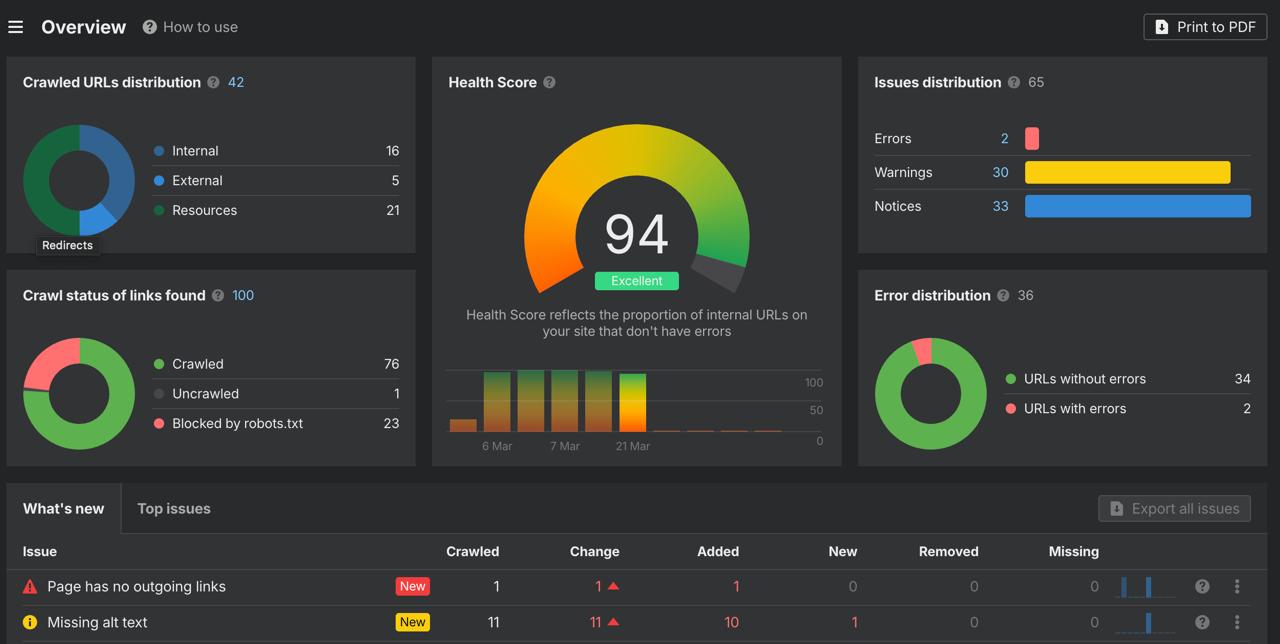
Quick Summary: LLM visibility is not one metric. The useful stack is crawl activity, citation visibility, AI-origin visits, and page-level attribution.
Most teams do not have an LLM visibility dashboard. They have a pile of unrelated screenshots.
One tool shows prompt mentions. Another shows referral traffic. A third shows Search Console.
Then someone says, "we appeared in ChatGPT this week," and the team treats that like proof the content program is working.
That is not measurement. It is anecdote collection.
The real question is simpler: which pages are being discovered, cited, visited, and improved by specific content changes?
That is the version of LLM visibility that matters.
Why Most LLM Visibility Reporting Fails
Most reporting fails because it mixes unlike signals into one narrative.
Teams combine:
- crawler hits
- brand mentions
- answer citations
- referral visits
- generic demand trends
Those are not the same thing.
A page can be crawlable and never cited.
A page can be cited and never clicked.
A page can get an AI-origin visit and still leave you unable to answer the question that matters most: what page change likely caused it?
If your reporting cannot separate those states, it cannot tell you what to do next.
What LLM Visibility Actually Means
The useful definition is:
LLM visibility is the degree to which a page can be discovered, reused, and turned into a measurable outcome across AI answer surfaces.
That breaks into four layers:
- Crawl activity: AI-related crawlers or retrieval systems can access the page.
- Citation visibility: the page or brand appears in an answer, source list, or cited result.
- AI-origin visits: a human user actually lands on the page after interacting with an AI surface.
- Attribution: you can connect that outcome back to the page and the content change most likely responsible for it.
Most teams track one or two of those layers and call it a strategy.
That is why the conclusions drift.
LLM visibility is not a single score. It is a chain.
The Four-Layer Measurement Stack
If you want reporting that survives contact with reality, build it in layers.
1. Crawl activity
This is the access layer.
You want to know whether AI-related crawlers are touching the page at all, how often they return, and whether fresh updates trigger new fetches.
This is not proof of performance. It is proof of access.
Still, it matters. OpenAI says ChatGPT search requires site owners to allow OAI-Searchbot if they want inclusion. If the relevant systems cannot fetch the page, it is hard for that page to become a durable source.
2. Citation visibility
This is the answer-surface layer.
You are measuring whether the page, URL, or brand appears inside generated answers, source panels, or cited results.
This is where prompt monitoring and answer capture matter.
It still does not prove traffic value. A page can appear in answers without earning a visit.
3. AI-origin visits
This is the human outcome layer.
Did a real visitor land on the page after interacting with ChatGPT, AI Overviews, Perplexity, Claude, or another AI answer surface?
This can show up through:
- referrers
- redirect-tracked links
- landing-path and session evidence
This is the part that turns visibility from awareness into traffic.
4. Attribution
This is the operational layer.
Which page earned the result, and which change most likely improved the outcome?
That means connecting:
- the published URL
- the optimization or content revision
- the later citation or visit event
Without attribution, you are left with vague storytelling. With attribution, you can say: this page, after this structural change, began earning more citations or visits.
That is the difference between reporting and a feedback loop.
Why Native Platform Metrics Are Incomplete
The platforms do not hand you a unified measurement view.
Google documents in its AI features guidance that traffic from AI features such as AI Overviews is included in overall Search Console reporting. That is useful, but it does not produce a clean native report called "AI Overview traffic by page."
Search Console still matters. It tells you how page-level search demand and click behavior are moving.
It just does not solve the full measurement problem by itself.
The chatbot side has the same limitation.
OpenAI's ChatGPT search announcement also says the product returns links to relevant web sources.
That is useful product context. It still does not give publishers a clean report showing:
- which page surfaced most often
- which citation produced a click
- which structural change improved the result
So the correct posture is: use platform reporting as partial evidence, then stitch the rest together yourself.
What To Instrument By Page
If you want a practical system, instrument the page, not just the brand.
Search Console for trend context
Use Search Console for:
- page-level impressions
- clicks
- post-update movement
- query shifts
Treat it as context, not total truth.
Server-side bot tracking for access
Track AI-related bot traffic separately from human traffic.
You want to know:
- which bot segments hit the URL
- whether key pages are revisited after updates
- whether deeper pages are visible to retrieval systems at all
That is how you distinguish "not seen" from "seen but not compelling."
Citation detection for answer reuse
Capture:
- cited URLs
- named mentions
- source-list appearances
- prompt cluster context
This tells you whether the page is reusable inside answers.
Referral and redirect tracking for human outcomes
Capture:
- explicit referrers when available
- redirect-tracked owned links when you control distribution
- session and landing-path evidence when direct referrers are incomplete
The goal is not fake certainty. It is higher-confidence attribution than "maybe this came from AI."
How Attribution Changes ROI Decisions
This is the layer most teams skip, and it is the layer that makes the dashboard useful.
If you only know that your brand appeared in an answer, you still cannot answer:
- which page earned the visibility
- whether the page was actually visited
- which structural change improved the odds
- whether the result is worth repeating
Attribution changes the question from "did we get mentioned?" to "what page and what change produced the outcome?"
That is the bridge between LLM visibility and ROI.
Once you can map:
- a page
- an optimization path
- a citation or visit event
you can start making real decisions:
- keep the structure that lifted citation rate
- reuse the section format that keeps getting quoted
- rewrite pages that get crawled but not cited
- invest more in pages that turn AI-origin visits into pipeline
What A Useful Dashboard Actually Shows
A useful LLM visibility dashboard does not collapse everything into one score.
It should show separate rows for:
| Metric | What it tells you | What it does not tell you |
|---|---|---|
| AI crawler hits by page | Whether retrieval systems are touching the page | Whether the page was cited |
| Citation rate by page | Whether answers are reusing the page | Whether humans clicked |
| AI-origin visits by page | Whether visibility produced traffic | Which change caused it |
| Attribution confidence | How strongly the event maps to a page/update | Absolute certainty in every case |
| Page-level change log | What changed structurally | Whether the change worked without the other layers |
That model makes failure modes visible:
- crawled but not cited
- cited but not clicked
- clicked but low attribution confidence
- citation lift after rewrite
That is the level where a team can stop guessing.
Common Measurement Mistakes
Mistake 1: treating mentions as proof of performance
A mention is not the same as a citation.
A citation is not the same as a click.
A click is not the same as page-level attribution.
If your reporting merges those states, it will overclaim wins.
Mistake 2: reading Search Console as a dedicated AI report
Search Console is useful.
It is not a clean LLM visibility dashboard.
Use it for trend context, not final truth.
Mistake 3: ignoring crawl visibility
Teams often ask "why are we not cited?" before they answer the simpler question:
are the relevant systems even touching the page?
Mistake 4: measuring brand buzz without page accountability
If your report cannot answer "which page earned this?" it will be hard to improve anything systematically.
That is where mention tracking stops being enough.
How To Start On A Real Site
If you are building this from scratch, start with a small page set anchored to the pages that already matter in your funnel. That usually means your highest-intent product pages, your most important educational pages, and the pages you want readers to move toward from the blog, your pricing page, or your about page.
- Pick the 10 to 20 pages that matter most commercially.
- Make sure each page has a stable published URL and tracked revision history.
- Capture AI-related bot activity by URL.
- Monitor citations and answer appearances by prompt cluster.
- Capture AI-origin referral traffic separately from generic direct traffic.
- Link page outcomes back to the specific page and optimization that shipped.
That is enough to build a first credible system.
The benchmark question is not "how visible is our brand in AI?" It is: which pages are getting touched, cited, visited, and improved by specific content changes?
Frequently Asked Questions
What is LLM visibility in one sentence?
It is the extent to which your content is discoverable, citable, and traffic-producing across AI answer surfaces.
Can I measure LLM visibility with Search Console alone?
No. Search Console is useful context, but it does not isolate the full chain of crawler access, citations, AI-origin visits, and page-level attribution.
What is the first metric I should track?
Start with page-level crawl activity and citation visibility together. That gives you a clean view of whether the page is merely accessible or actually reusable.
Why is attribution so important?
Because otherwise you cannot connect a visibility outcome back to the page and the content change that likely caused it.
Do I need to track bots separately from humans?
Yes. Bot traffic is an access signal. Human traffic is an outcome signal. Measure them separately or the reporting gets muddy.
What does a good dashboard look like?
A good dashboard separates crawl activity, citation visibility, AI-origin visits, and attribution confidence by page.
If you want to measure AI visibility without guessing, start by instrumenting the pages that matter most and tracking the full chain from crawl to citation to visit. Then decide which pages deserve the next rewrite.
Sources
- Google Search Central, "AI features and your website", accessed March 21, 2026.
- OpenAI Help Center, "ChatGPT search", updated February 2026.
- OpenAI, "Introducing ChatGPT search", updated February 5, 2025.
- OpenAI, "Seizing the AI opportunity", March 13, 2025.