What Is Generative Engine Optimization? How GEO Works
A plain-English guide to GEO: what it is, how it differs from SEO, what makes content citable, and how to measure AI-origin traffic.
InflectPublished
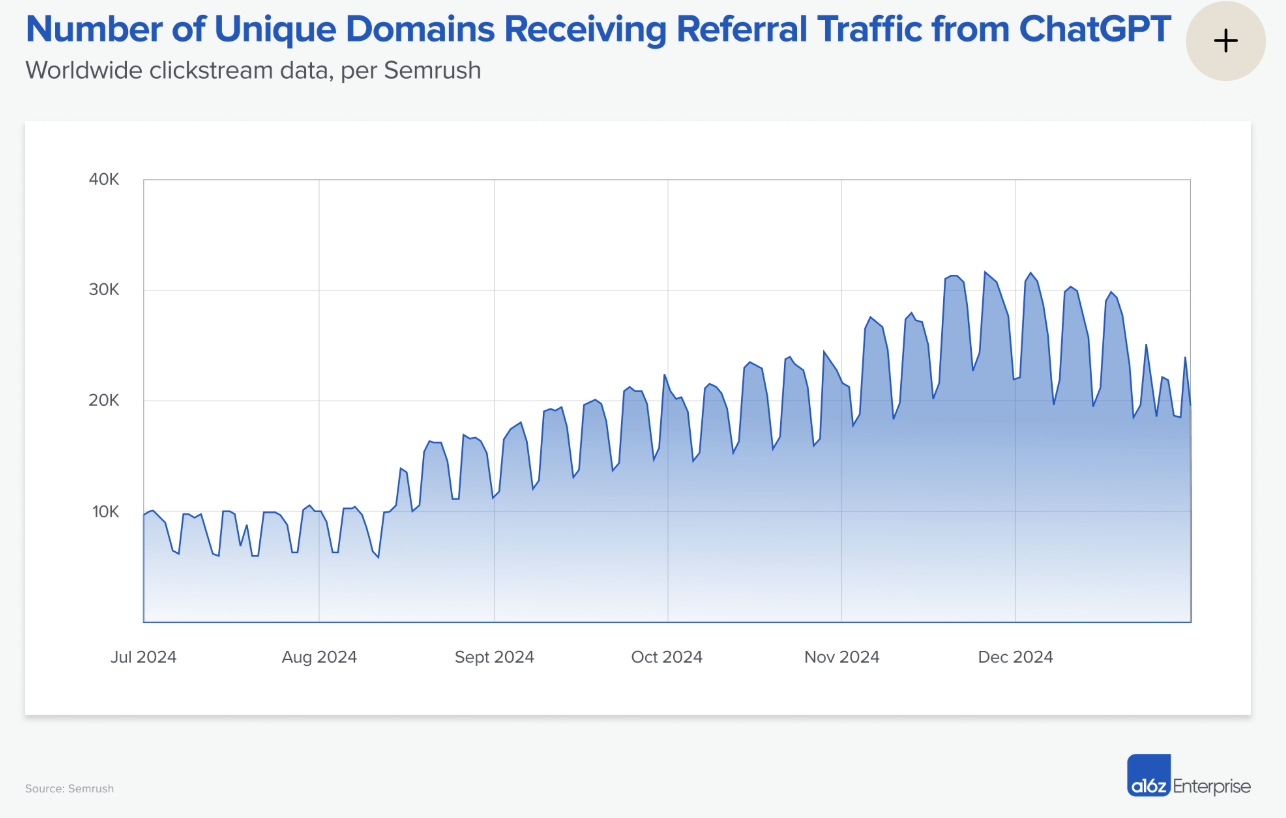
Quick Summary: Generative engine optimization helps AI systems cite, quote, and send traffic to your pages.
AI search is not hypothetical anymore.
AI Overviews now reaches more than 1.5 billion users every month.
Google's Search AI Mode update in May 2025 notes that AI Overviews had expanded to 200 countries and territories, and that queries that show AI Overviews are driving more than 10% growth in query volume in major markets like the U.S. and India.
That changes the distribution problem for content teams. You are no longer competing only for a blue-link click. You are competing to become one of the sources an AI system decides to quote, summarize, or send traffic to.
That is what generative engine optimization is about.
What Generative Engine Optimization Means
Generative Engine Optimization, or GEO, is the practice of structuring and writing content so AI systems can confidently use it in generated answers.
Traditional SEO is built around ranking. GEO is built around retrieval, synthesis, and citation. A page can still benefit from both, but they are not the same job.
The simplest way to think about it:
| Question | SEO | GEO |
|---|---|---|
| What are you trying to win? | A ranking position | A citation or brand mention inside an answer |
| What is the unit of value? | A click from a search results page | A quoted source, a cited page, or an AI-origin visit |
| What does the system reward? | Relevance, authority, links, technical health | Clear entities, factual density, answer structure, trust signals |
| What should you measure? | Rank, CTR, organic traffic | Citation rate, AI-origin traffic, crawl activity, attribution by page |
If SEO gets you discovered, GEO gets you reused.
Why This Matters Now
The market signal is no longer subtle.
Pew's May 2025 browsing-data analysis found that 58% of U.S. adults in its panel encountered at least one Google search result with an AI-generated summary in March 2025, and 13% visited an AI chatbot site at least once that month.
Pew's June 2025 follow-up put ChatGPT usage at 34% of U.S. adults, roughly double the share measured in 2023.
That does not mean Google is dead. It means the research journey is fragmenting.
Some users still search traditionally. Some start in ChatGPT or Perplexity. Some see an AI Overview, read the summary, and never click.
SparkToro and Datos estimated in July 2024 that 58.5% of U.S. Google searches and 59.7% of EU Google searches ended without a click to the open web. That figure is not an official Google metric, but it is directionally useful: more search behavior is ending on the results surface itself.
For B2B teams, that creates a new question:
If the answer is consumed inside the AI interface, how does your brand still show up?
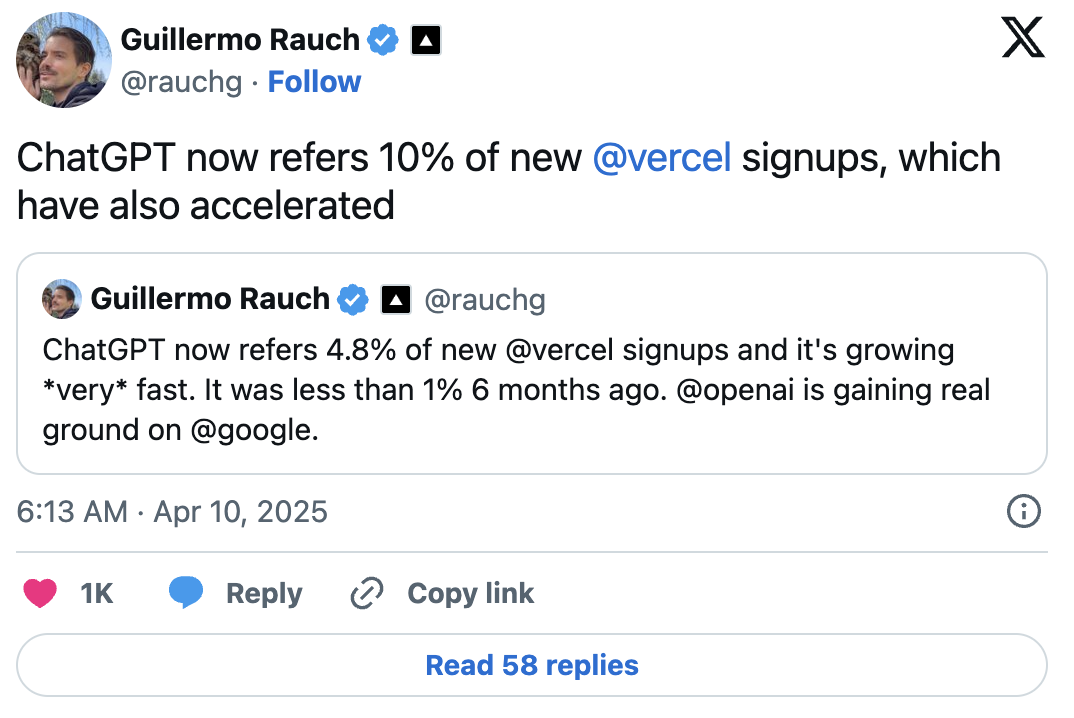
Vercel published a first-party example in April 2025 showing ChatGPT-referred signups accelerating, a useful reminder that AI-origin traffic can already matter commercially. Vercel's write-up.
What GEO Changes In Practice
GEO does not require you to write for robots. It requires you to write in a way that machines can extract without mangling the meaning.
That usually means:
- Your definitions appear early.
- Your headings map to real questions.
- Your claims are concrete enough to cite.
- Your page gives the model confidence about who you are, what the page is about, and why it should trust the content.
The failure mode is easy to recognize. A page may be readable, but still unusable for synthesis. It buries the answer, uses vague pronouns, avoids specifics, and never states the core claim cleanly enough to quote.
That page might rank. It might even convert. But it is harder for an LLM to lift into an answer without extra inference.
The Signals That Usually Make Content More Citable
No public platform publishes a full GEO ranking formula. But the pages that get reused tend to share the same structural traits.
1. Specific entities
Name the platform, product, company, category, and concept directly. "Inflect tracks citation-change attribution across AI search surfaces" is easier to reuse than "this tool helps with AI visibility."
2. Front-loaded answers
The first sentence should usually answer the heading. Make the extraction path short.
3. Factual density
Specific claims travel better than padded copy. Dates, counts, definitions, and direct contrasts are easier to cite than abstract positioning.
4. Question-shaped structure
An H2 that mirrors a buyer question is easier for both users and models to understand than a soft heading like "Background" or "Landscape."
5. Trust signals
Source links, consistent schema, internal consistency, and clear authorship all reduce ambiguity.
A Worked Example: Rankable Copy vs Citable Copy
Here is the practical difference.
Before
"AI search is changing how people find information online. Brands need to adapt their content strategy if they want to stay visible across this new landscape."
That sounds polished. It is also weak. There is no timeframe, no system named, no user behavior described, and no sentence that stands on its own as a quotable fact.
After
"AI Overviews reaches more than 1.5 billion users every month, which means many informational searches now end on an AI-generated summary before a user clicks a website."
That version is stronger for two reasons. It names the system and it anchors the claim in a source and date. A model can quote it, paraphrase it, or use it as support without inventing missing context.
That is the center of GEO work. You are not just polishing prose. You are making the page safer to reuse.
GEO Is Not Just About Citations
A good system should separate three different signals:
Bot or crawler activity
This tells you whether AI crawlers and related bots are hitting the page at all. It is an early visibility signal, not proof of business impact.
Human AI-origin traffic
This is when a real user lands on your page after interacting with ChatGPT, Perplexity, Claude, Gemini, or another AI surface. Sometimes you get a referrer. Sometimes you only get a probabilistic signal.
Citation attribution
This is the hardest and most valuable layer. It tells you which content change or published page is most likely associated with the citation or visit event.
If your measurement system collapses all three together, you lose the ability to answer simple questions.
Was the page crawled? Was it cited?
Did a human actually arrive? Which optimization caused the change?
That is why attribution matters more than raw mention counts.
Why Mention Tracking Is Not Enough
Many tools can tell you that your brand appeared somewhere.
That is useful, but it is incomplete. It does not tell you which page earned the citation, which structural change improved your odds, or whether the mention turned into a visit.
Inflect's angle is not just "you were cited." It is "this page, with this optimization path, is the thing most likely responsible for the citation event."
That is a better operating model for content teams. You can turn it into repeatable decisions:
- keep the page structure that lifted citation rate
- reuse the section format that AI systems keep quoting
- fix pages that get crawled but do not get cited
- separate awareness signals from actual traffic signals
Without that layer, GEO turns into anecdote collection.
Where The Current Hype Goes Wrong
A lot of GEO content collapses into one of two bad extremes.
The first is recycled SEO language with "AI" swapped in. The second is overconfident nonsense about secret ranking factors no one can verify.
The useful middle ground is simpler:
- accept that AI-driven discovery is growing
- write pages that are easier to retrieve and reuse
- track crawler activity, citations, and referral traffic separately
- use source-backed claims
- update pages when the evidence changes
You do not need mysticism for this. You need disciplined content operations.
What To Change On A Real Page First
If you want to apply GEO to existing content, start with these changes:
- Rewrite the opening to answer the main question immediately.
- Replace vague headings with headings that match user questions.
- Add one comparison table or structured list where the topic calls for it.
- Add a short FAQ section to cover adjacent questions.
- Add source-backed facts instead of generic claims.
- Make sure the page is internally linked from other important pages like Pricing, About, and your Blog.
This is not glamorous work. It is what makes a page usable in synthesis.
How To Measure GEO Without Lying To Yourself
Use a stack of metrics, not one vanity number.
Crawler activity tells you whether AI-related systems are touching the page.
Citation rate tells you how often your page or brand appears across tracked prompts or monitored surfaces.
AI-origin referral traffic tells you whether those appearances are actually producing visits.
Attribution confidence tells you how strongly a visit or citation maps back to a specific page or optimization.
If you only track one of those, you can talk yourself into the wrong conclusion.
A page can be crawled but not cited. It can be cited but not clicked.
It can get traffic without clear attribution. You need the full chain.
Frequently Asked Questions
What is generative engine optimization in one sentence?
It is the process of making a page easier for AI systems to retrieve, trust, summarize, and cite.
Is GEO replacing SEO?
No. SEO still matters because buyers still search traditionally. GEO sits alongside SEO and becomes more important when the query ends on an AI-generated answer.
Can you track traffic from ChatGPT or Perplexity reliably?
You can track some of it directly through referrers or explicit redirects, and some of it probabilistically through multi-signal attribution. You should treat crawler activity, human referral traffic, and citation attribution as separate layers.
What is the most important GEO tactic?
Write answer-first sections with concrete claims. The easiest page to cite is the page that says exactly what it means, early, with supporting evidence.
Do I need original data to win at GEO?
Not always, but it helps. First-party evidence, product data, and concrete examples give AI systems something distinctive to reuse instead of another generic definition.
How should I start?
Start with your highest-value existing articles. Tighten the opening, add clearer structure, improve factual density, and then measure whether crawler activity, citations, and referral traffic move.
Ready to see where your brand stands in AI search? Start with a free domain crawl →
Sources
- Google, "Alphabet Q1 2025 earnings results", April 24, 2025.
- Google, "Google Search AI Mode update", May 20, 2025.
- Pew Research Center, "What web browsing data tells us about how AI appears online", May 23, 2025.
- Pew Research Center, "34% of U.S. adults have used ChatGPT", June 25, 2025.
- SparkToro, "2024 zero-click search study", July 1, 2024.
- Semrush, "ChatGPT Traffic Study", supporting referral-growth chart.
- Vercel, "How Vercel's adapting SEO for LLMs and AI search", April 2025.